If you're someone who has outgrown traditional user interviews or can't afford them in the first place, you've probably looked at Listen Labs - an AI-led customer research platform. It's a strong platform, but it isn't the only option, and for many product teams, it isn't the right one. This guide breaks down the six most relevant alternatives, with an honest feature-by-feature comparison across the things research and growth teams actually care about.
Why Teams Look For a ListenLabs Alternative?
Listen Labs is an AI-led research platform that recruits from a 30M+ global panel, runs autonomous voice, video, and text interviews across 100+ languages, and delivers executive-ready reports. The fraud detection system filters low-quality responses, and the scale is genuinely impressive for teams running continuous, large-volume studies.
That said, product managers at startups and growing SaaS companies tend to run into a few structural limitations:
1. Panel participants aren't your users.
When you recruit from a third-party panel, you're talking to people who agreed to be interviewed -not the customers who just churned, never activated, or upgraded last week. The insights can be directionally useful, but they often miss the specific context that makes them actionable for your product decisions.
2. Pricing and positioning are enterprise-first.
Listen Labs is priced and positioned for large research and insights teams. For a product manager at a 30-person startup, the commercial model can be a barrier before a single interview is run. If budget is a real constraint, how to run customer interviews 10x cheaper without losing quality covers approaches that work at different price points.
3. The interview channel is unfamiliar to most participants.
Research platforms that rely on email invitations to web-based interview tools tend to see completion rates in the 30–45% range. When participants don't recognize the platform or aren't motivated to complete a research session, response quality drops alongside volume.
4. Insights don't always tie back to your specific users.
Panel-sourced research gives you a representative sample, but it doesn't tell you why your users behave the way they do, and insights get lost in the meantime. For churn analysis, onboarding friction, or feature validation, you need to talk to the people who use your product.
Our Ranking Methodology
Each alternative was evaluated against the four limitations above. A tool earns its place in this list by solving at least one of them meaningfully. Here are the five criteria we used:
- Access to your users directly - Does the tool let you reach your own customers, or does it rely entirely on a third-party panel?
- Insight depth - Does the AI probe beyond the surface answer to surface real motivations, or does it stop at the first response?
- Speed to insight - Can a product manager go from question to decision-ready summary within a single working day?
- Participant experience - Does the interview channel feel natural to the participant, and does that translate into higher completion rates and more honest answers?
- Accessibility - Is the tool viable for a team without an enterprise-level dedicated research budget or a procurement process?
Listen Labs Alternatives at a Glance
6 Best ListenLabs Alternatives: Deep Dives
1. Frank AI Researcher
Who is this tool for: SaaS founders, product managers, and marketing leads at startups and growing brands who need fast, credible customer insights but don't have a dedicated research team or an enterprise budget.
Frank AI Researcher approaches customer research differently from every other tool in this list. Rather than sourcing participants from a panel, Frank reaches your real customers, people who signed up, churned, upgraded, or never activated. Frank handles the interview for you, over voice (video and chat coming soon), asking the right follow-up questions on the spot to get to the why behind customer behavior.
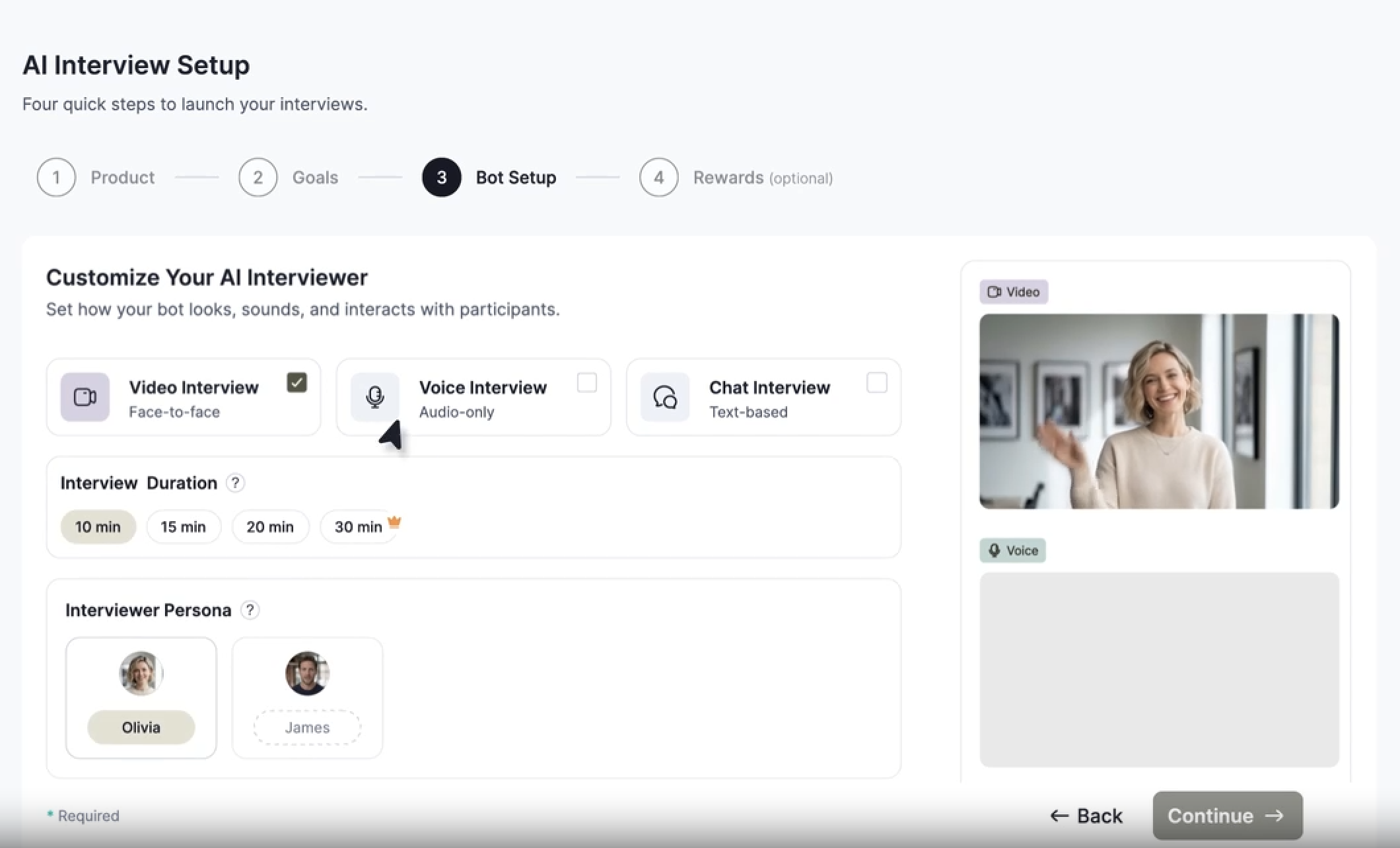
The workflow maps naturally onto how teams already operate. You define what you want to understand - why users drop off during onboarding, what's blocking feature adoption, what the unmet need is behind a support spike and Frank handles everything from there.
Pros
- Reaches your real customers - no panel recruitment needed
- Scientifically credible methodology; insights are presentable to leadership without the 'is this rigorous?' question
- 30+ language support - research isn't limited to English-speaking markets
- Every insight links back to the transcript and recording for full verification
- Overnight structured summaries; no manual synthesis required
Cons
- Requires access to your own user base - not suitable if you have no existing customers to contact
- No enterprise-grade panel recruitment for studies that need external participants
Why choose Frank over Listen Labs?
Listen Labs gives you scale with strangers. Frank gives you depth with your actual customers. If your most pressing questions are about churn, activation failure, or unmet needs within your existing user base, Frank directly resolves the core limitation of panel-based research: the participants are the people your decisions affect, not a representative proxy.
Pricing
Free tier available. Starter subscription from $49 a month.
2. Strella
Who is this tool for: Research teams and agencies handling sensitive or complex study topics where fully automated moderation introduces risk.
Strella's defining feature is moderate flexibility. Unlike fully automated platforms, it allows human researchers to observe AI-moderated sessions live and step in when a sensitive topic needs a different approach. The founding team has UX research backgrounds at companies like DoorDash, and that background shows in how the platform handles nuanced research scenarios.
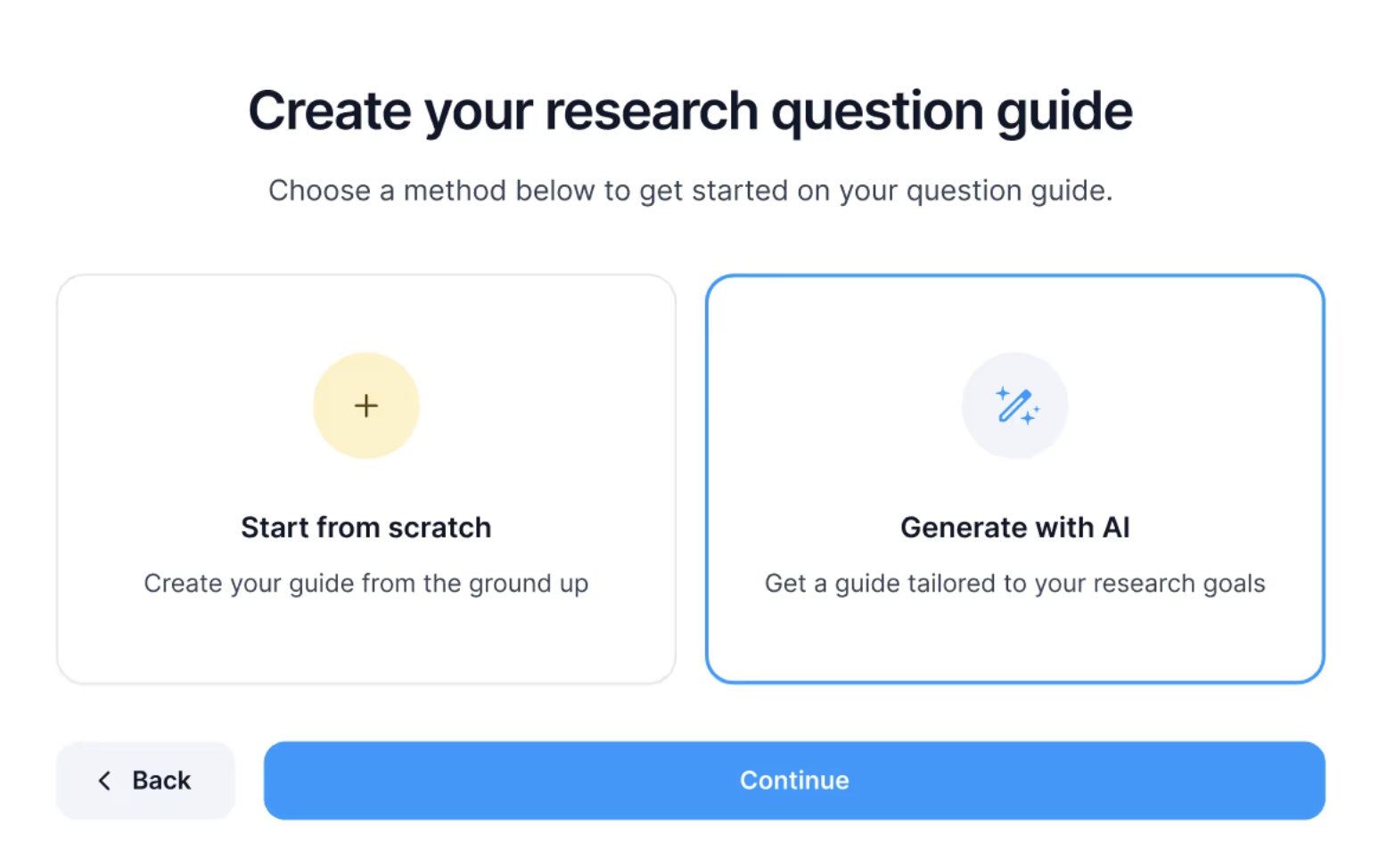
For teams running studies on emotionally complex subjects - healthcare decisions, financial stress, brand trust - the ability to intervene mid-session is a meaningful safety net. Strella also generates shareable highlight reels quickly, making it easy to distribute findings to non-research stakeholders without extra editing work.
Pros
- Human moderator can intervene mid-session - critical for sensitive research topics
- Fast highlight reel generation for easy stakeholder distribution
- Usability testing and research with one tool
- Strong UX research methodology pedigree
Cons
- English-primary - limited multilingual support
- Human override adds operational overhead compared to fully automated platforms
Why choose Strella over Listen Labs?
Listen Labs is fully automated with no human override option. Strella directly resolves the risk of AI moderation falling short on sensitive or emotionally complex topics, giving research teams a safety net that purely automated platforms can't offer.
Pricing
Custom pricing - contact Strella directly.
3. Conveo
Who is this tool for: European product and insights teams, and teams whose research deliverables need to be video-forward for stakeholder consumption.
Conveo is a Y Combinator-backed platform built around video-first asynchronous interviews. It incorporates traditional qualitative research techniques -sequencing, quotas, projective probing -making it a strong fit for teams that want research methodology credibility alongside automation speed.
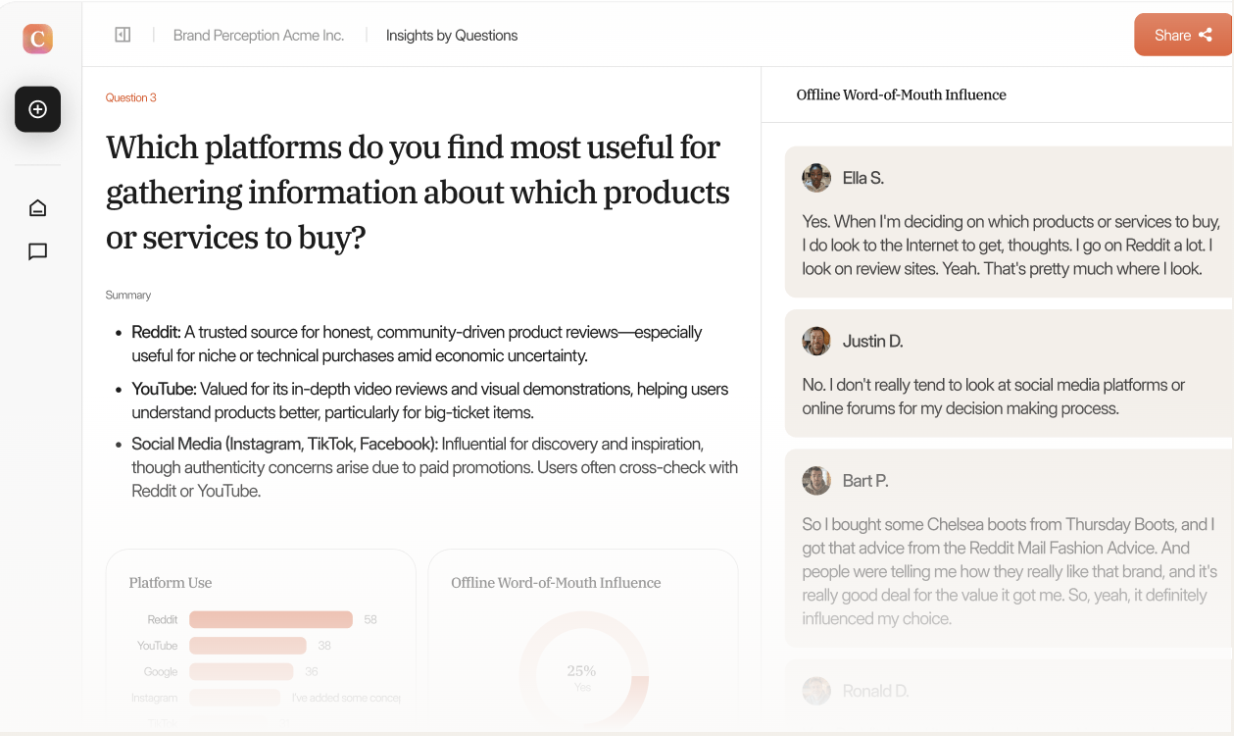
Two things distinguish it from the field. Its European data residency options make it a natural choice for teams with GDPR obligations or European customers who are cautious about data handling. And its video-first format produces deliverables -thematic clip compilations, stakeholder-ready narratives -that translate well into product reviews and board presentations.
Pros
- EU data residency - GDPR-compliant by design
- Video-first format produces stakeholder-ready clip compilations
- Incorporates traditional qualitative methodology (quotas, projective probing)
- Y Combinator-backed, with a strong product trajectory
Cons
- EU-market focus may limit applicability for global research programs
- The video-first format is less flexible if written or audio-only outputs are preferred
Why choose Conveo over Listen Labs?
Listen Labs has limited GDPR-native infrastructure. Conveo directly resolves the participant experience and data residency gap for European teams, and its video-first outputs are better suited to teams whose stakeholders expect visual deliverables rather than text reports.
Pricing
Custom pricing - contact Conveo directly.
4. Voicepanel
Who is this tool for: Individual PMs or small teams at early-stage companies wanting a low-friction entry point into qualitative customer research.
Voicepanel, a Y Combinator-backed company, keeps the research setup minimal. You tell it your learning objective, and it handles recruitment, conversations, analysis, and delivery. The coolest part is that you can get the results in Slack. It supports voice, video, chat, and phone interactions across 29 languages, with a free entry tier and a public starting price of $99/month.
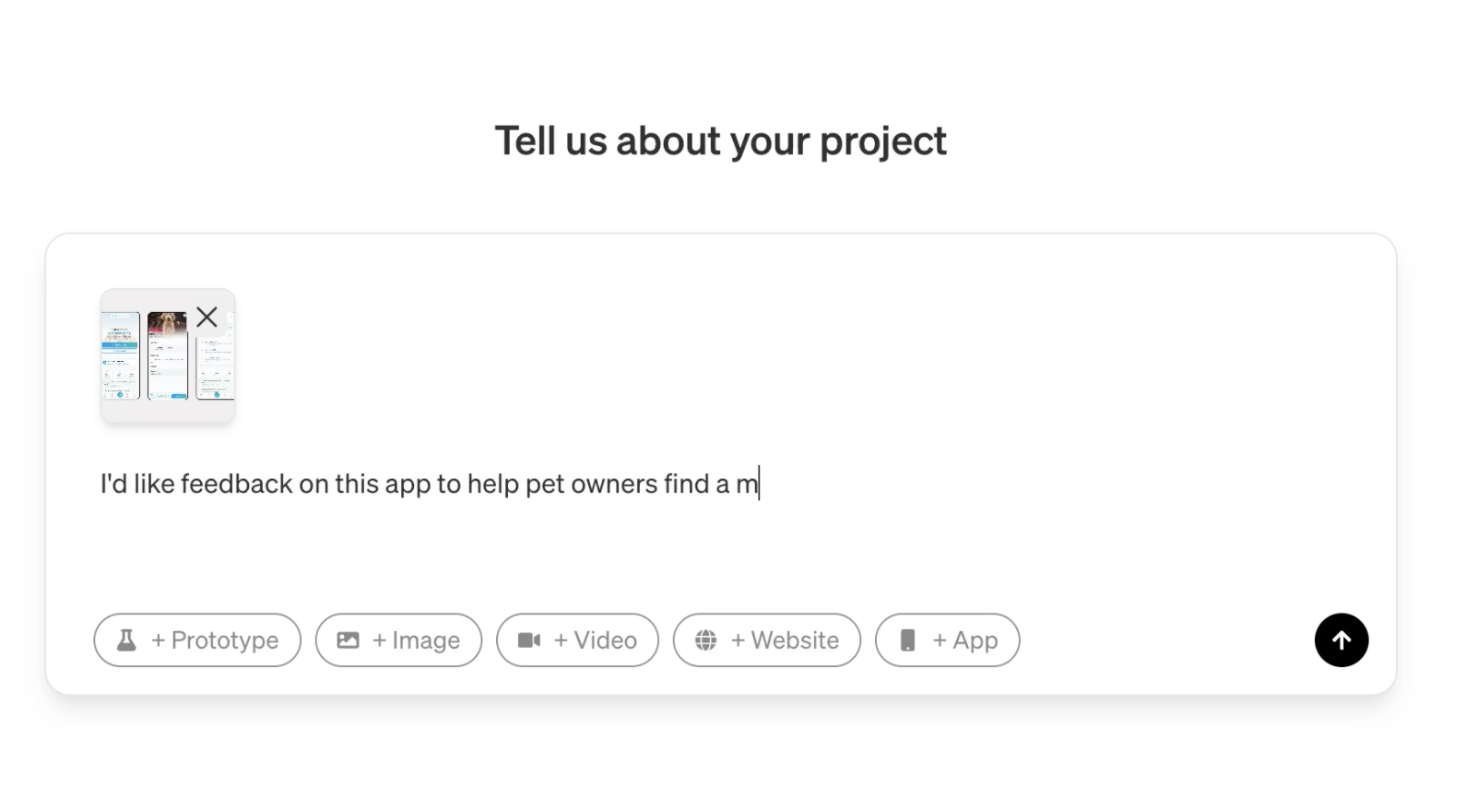
That pricing transparency makes Voicepanel the most accessible starting point in this comparison. For individuals professional who want to begin gathering qualitative feedback without a procurement process, the low barrier to entry is genuinely useful. The trade-off is depth. Insights work well for directional decisions but may need additional synthesis before they're ready for a leadership presentation.
Pros
- Free tier available; public pricing from $99/month
- Real-time Slack delivery - no manual reporting required
- Supports voice, video, chat, and phone - the broadest channel mix in this comparison
- 29 languages with auto-translation
- Minimal setup - define the objective, and the platform handles the rest
Cons
- Insight depth is suitable for directional decisions; it may need additional synthesis for leadership presentations
- Less customizable for teams with complex research methodology requirements
Why choose Voicepanel over Listen Labs?
Listen Labs requires an enterprise commitment before you can run a single study. Voicepanel directly resolves the accessibility barrier with transparent pricing, a free tier, and a setup that doesn't require a procurement process - making it the right starting point for teams with a limited research budget.
Pricing
Free tier available. Paid plans from $99/month.
5. Lyssna
Who is this tool for: Product and design teams that need fast, structured validation on concepts, copy, or UX flows — especially useful early in the design process.
Lyssna (formerly UsabilityHub) is a remote research platform built around the widest variety of test types in this comparison - first-click tests, five-second tests, preference tests, card sorting, tree testing, and prototype testing, alongside survey-style moderated and unmoderated studies. It combines a built-in panel of 690,000+ participants with the option to bring your own.
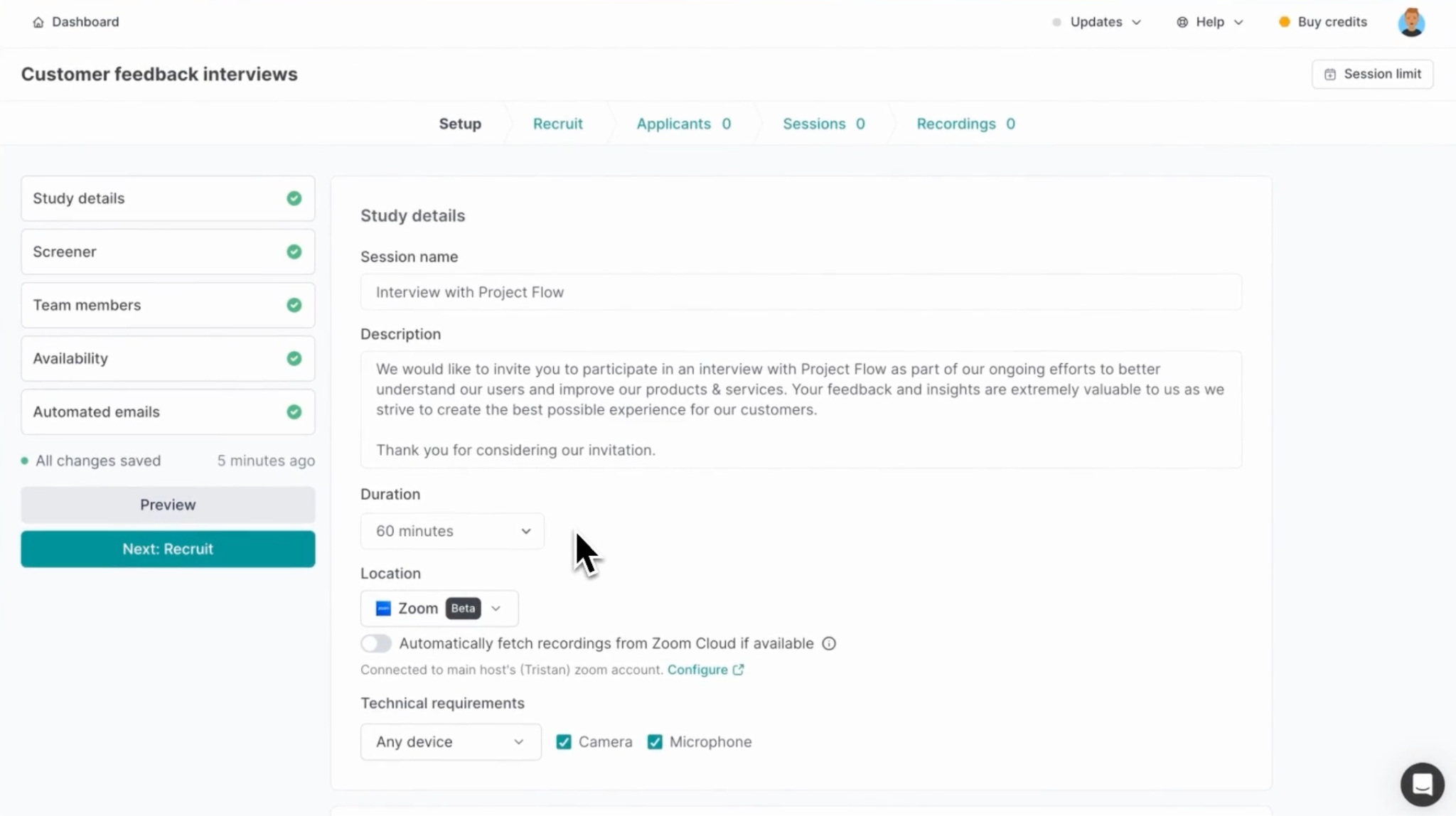
For teams that need to validate designs, test copy, or measure comprehension before shipping, Lyssna is the most accessible starting point in this list — free to get started, with results on shorter studies arriving within hours.
Pros
- Free tier available — zero barrier to get started
- Broadest test-type library in this comparison — usability, preference, card sorting, tree testing, and more
- Results from shorter studies arrive within hours
- 690,000+ panel participants or bring your own recruitment link
- Strong fit for design and product validation tasks
Cons
- Relies on third-party panel by default — if reaching your own users is the priority, you need to supply your own recruitment link
- No AI follow-up probing — captures structured task responses, not open-ended motivations
- Less suited for deep qualitative insight into churn or unmet needs
Why choose Lyssna over Listen Labs?
Listen Labs is built for open-ended qualitative depth. Lyssna directly resolves the accessibility and speed barriers — its free tier and rapid turnaround make it the right choice for teams that need quick directional answers on design or messaging decisions, not necessarily deep motivational insight.
Pricing
Free tier available. Paid plans start at approximately $83/month.
6. Outset
Who is this tool for: Enterprise UX research and consumer insights teams that need conversational depth alongside screen-aware visual research - particularly for prototype evaluations and AI product experience studies.
Outset is an AI-moderated research platform built for the depth end of qualitative research. It runs adaptive 30-minute-plus interviews across voice, video, and chat, with up to 10 smart follow-up questions per topic, and supports bring-your-own participants without extra fees.
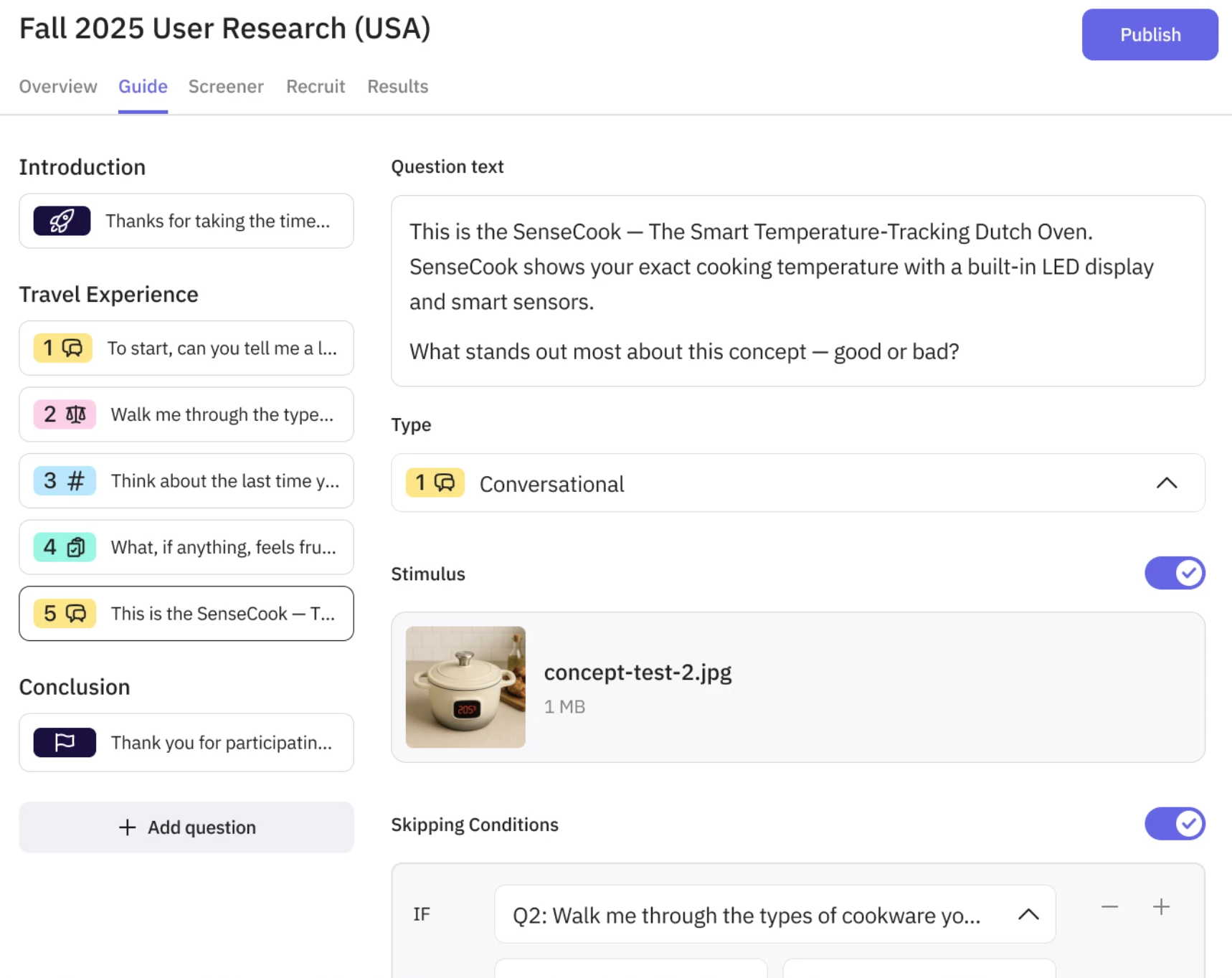
The standout feature is Visual Intelligence, the first AI moderator with "eyes" that can interpret what a participant is doing on-screen during prototype walkthroughs or product evaluations.
Pros
- Visual Intelligence - AI moderator can interpret on-screen behaviour during prototype tests, the first platform in this list with that capability
- Adaptive 30-minute-plus interviews with up to 10 follow-up questions per topic for genuine depth
- Bring-your-own participants supported without extra fees, offering integrations with third parties
- Multimodal - voice, video, and chat in one platform
Cons
- Custom enterprise pricing with no public self-serve tier - buyer-reported around $20K per seat
- No live human moderation override - sessions are fully AI-led
- English-primary, though multilingual support is expanding
Why choose Outset over Listen Labs?
Listen Labs runs short voice surveys at a panel scale. Outset is built for the opposite end of the spectrum. Deep, adaptive interviews with visual intelligence for screen-based research. If your work involves prototype walkthroughs, usability evaluation, or AI product UX studies alongside discovery interviews, Outset directly resolves the methodological gap that Listen Labs' voice-only format leaves open.
Pricing
Custom pricing - contact Outset directly.
Which Tool Is Right for You?
Each tool in this list solves a different version of the same problem. A few quick guidelines:
- Use Frank AI Researcher if you need honest, deep insights from your real customers — churn reasons, activation failures, unmet needs without a research team or enterprise budget.
- Use Strella if you're running studies on sensitive or emotionally complex topics where AI-only moderation introduces risk.
- Use Listen Labs if you need to recruit from a large external panel at enterprise scale with high-volume, multi-language studies.
- Use Conveo if you operate under GDPR, have European customers, or need video-forward deliverables for stakeholder presentations.
- Use Voicepanel if you're starting out with qualitative research and need a low-friction, budget-accessible entry point.
- Use Lyssna if you need fast, structured validation on designs, copy, or UX flows — and want results within hours.
- Use Outset if you're running enterprise UX research, prototype evaluations, or AI product UX studies that need screen-aware moderation and deep adaptive probing.
The Bottom Line
There is no single "best alternative" to Listen Labs. Each tool in this list is built around a different limitation, and the right choice depends on which one matters most for the question you're trying to answer.
If you need a panel reach at enterprise scale, Listen Labs is purpose-built for that. If you're running studies on sensitive topics where AI moderation could fall short, Strella's human override is the safety net.
However, Frank sits in a different spot. Instead of recruiting strangers from a panel, it reaches the people who actually use your product. It runs the interview for you in 30+ languages, with every insight linked back to the original transcript and recording for transparency.
Pick the tool that closes the gap between the question you're asking and the people best placed to answer it.