
Outset checks a lot of the right boxes. It offers AI-moderated interviews, faster synthesis, scalable qualitative research, and multilingual support, which is exactly why it has become such a strong option for many research teams.
But if you are here, chances are something still feels off. Maybe the workflow feels heavier than your team needs. Maybe you want to talk to real customers right after a key action, not pull them into a separate research setup. Maybe you need something easier for non-researchers, broader UX methods, or pricing that is easier to understand and plan around.
This article will help you compare the best Outset alternatives based on how your team actually runs research, not just how the category is usually sold.
Why Teams Look For an Outset Alternative?
Outset.ai is a strong platform for AI-moderated research, especially for teams running structured qualitative work at scale. But that same focus is also why some teams start looking elsewhere. Usually, it comes down to a few practical reasons:
- The workflow can feel heavier than necessary
Outset is built for structured, research-led workflows, which can feel like too much for smaller teams, founders, or PMs who just need lightweight discovery. - AI-moderated interviews are not always the right method
Some teams need more than AI-led interviews, such as prototype testing, usability studies, diary research, or broader research workflows. - Some teams want feedback closer to the real moment
Instead of setting up a separate study, they want to capture customer reactions right after signup, purchase, churn, or another key moment. That is also one reason PMs use AI for continuous discovery in the first place. - Adoption can feel less straightforward for smaller teams
Custom pricing and enterprise-style packaging can make the tool harder to evaluate quickly, especially for cross-functional teams that want to test and move fast.
Outset is still a strong option. But if your team wants lighter adoption, a different method mix, or a more natural way to reach customers, that is usually where alternatives start to look more appealing.
How We Ranked the Best Outset Alternatives?
We did not rank these tools by feature count alone. We ranked them by how well they solve the practical reasons someone would move away from Outset.
- Ease for non-researchers: Can founders, product managers, marketers, or CX teams use it well without needing a heavy research setup?
- Method fit: Does it support the kind of research teams need, whether that is AI interviews, usability testing, prototype testing, diary studies, or broader workflows?
- Customer access and participation: How easily can teams reach real customers and get them to take part in a timely, natural way?
- Adoption and pricing clarity: Is the tool easy to evaluate, budget for, and introduce without too much friction?
- Trustworthiness of outputs: Are the results easy to verify, share, and use in decision-making through transcripts, recordings, summaries, clips, or reports?
These criteria reflect the real tradeoffs in this category and make the comparison more useful than a simple feature list.
Outset Alternatives at a Glance
The deeper question now is which tool actually solves the reason you started looking beyond Outset in the first place.
6 Best Outset Alternatives: Deep Dives
1. Frank
Who is this tool for: Frank is for startups, product teams, founders, marketers, and CX teams that want to run deep customer interviews with real customers without heavy research ops, manual scheduling, or long setup cycles.
Frank AI Researcher is an AI-moderated interviewer built for teams that want to run deep customer interviews with real customers without the usual scheduling overhead. It supports voice calls (video and WhatsApp chat interviews are coming soon), then turns those conversations into transcripts, highlights, thematic analysis, and structured insights. Frank works well for startups and mid-size companies that want fast insight without heavy research ops, especially when they are trying to run customer interviews without losing quality.
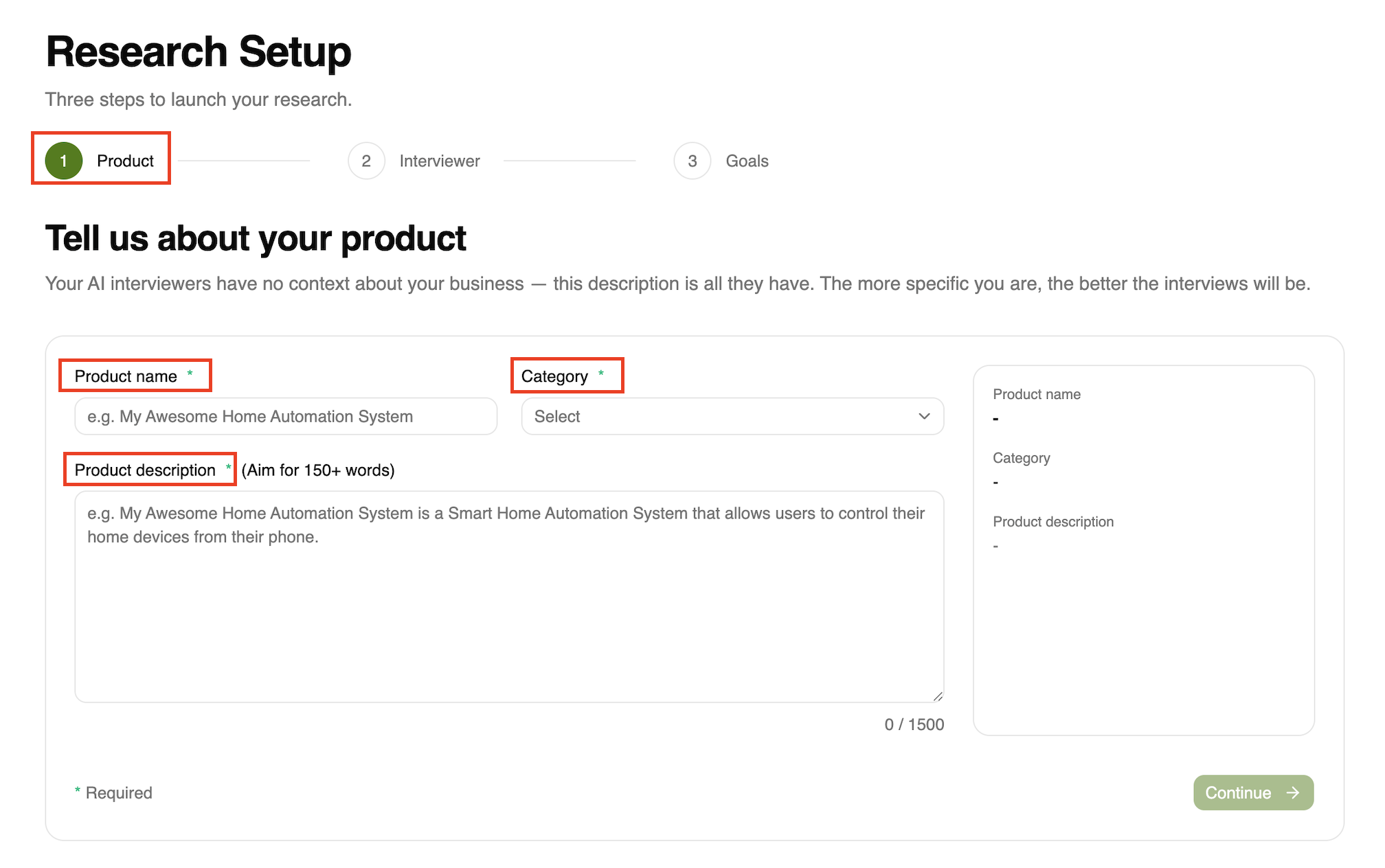
The setup screen shows a focused, guided flow: product details first, then bot setup and goals, which keeps launch simple instead of making teams build a full research operation upfront.
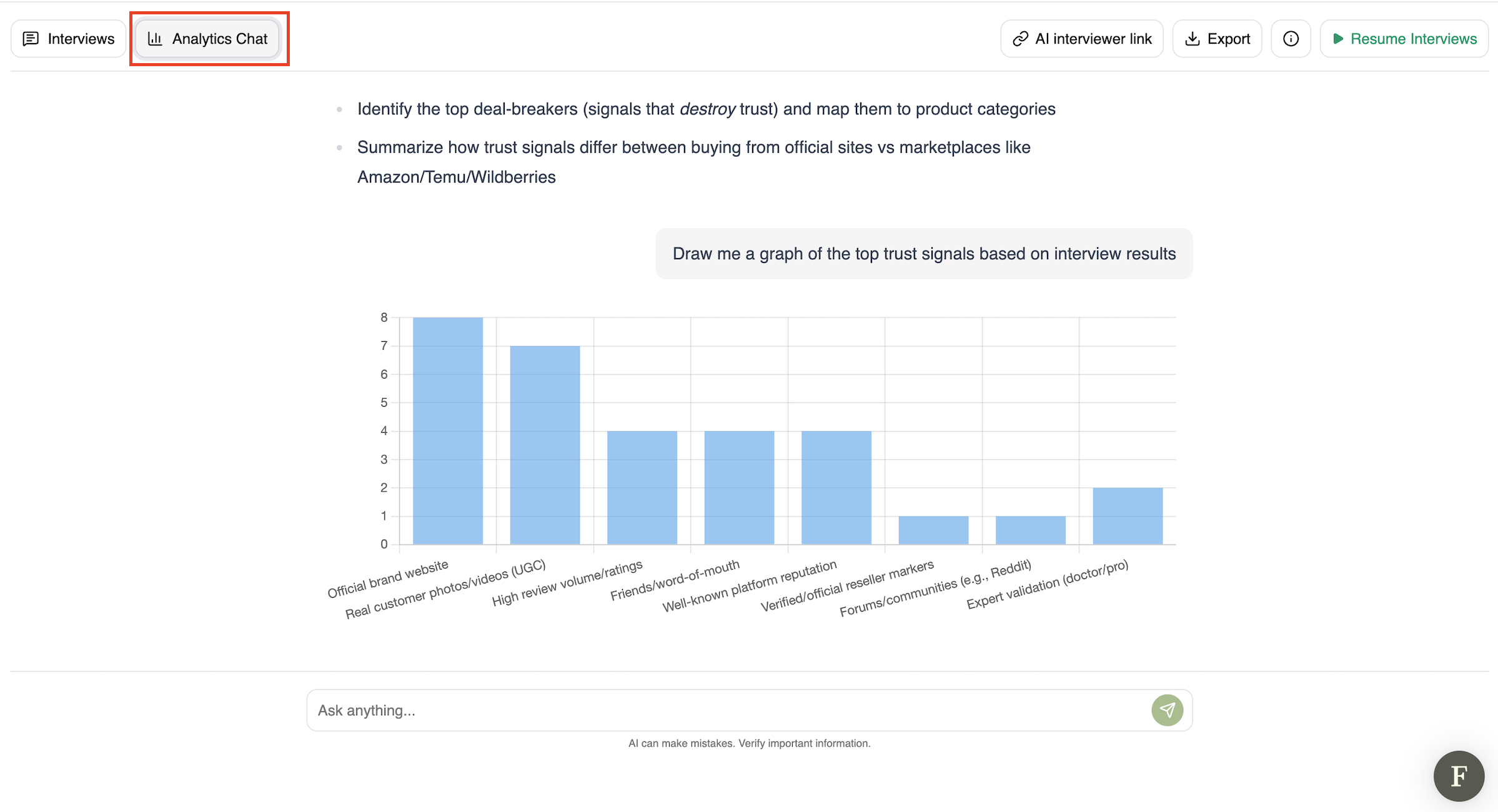
The dashboard image then shifts into analysis mode, where notes, chat, and transcript-based synthesis show how Frank is designed to turn interview data into usable insights quickly.
Pros
- Runs interviews at scale without manual scheduling
- Supports voice interviews (video, WhatsApp chat interviews coming soon)
- Strong for startups and mid-size companies that need customer interviews to happen without assigning a dedicated researcher to every study.
- Includes transcripts, thematic analysis, shareable reels, and highlights
- Free plan and clear paid pricing make it easy to test and adopt
Cons
- Less useful if you do not yet have your own audience to learn from, because there it doesn’t support built-in participant panels for teams starting from zero
- Less of a full UX testing suite than Maze or UserTesting
- Less of an enterprise survey infrastructure than Qualtrics
Why choose Frank over Outset?
Choose Frank over Outset if your biggest issue is not AI interviews themselves, but the fact that you want customer conversations to happen in a more natural, lower-friction way and closer to the real moment. It is especially useful for post-purchase feedback questions, churn research, and other moments where speed and timing shape the quality of the insight.
Pricing
- Free
- Starter: $49/month billed annually at $590/year
- Growth: $166/month billed annually at $1,990/year
- Business: $312/month billed annually at $3,750/year
- Enterprise: custom pricing
2.Great Question
Who is this tool for: Great Question is for lean research, product, design, and marketing teams that want one organized workflow for recruiting participants, running studies, managing incentives, and turning customer feedback into shared insights.
Great Question is an all-in-one customer research platform built to help teams recruit participants, run interviews and surveys, manage incentives, and organize research in one place. Its positioning is especially strong for product teams, marketers, designers, and lean research functions that want one workflow instead of stitching together multiple tools.
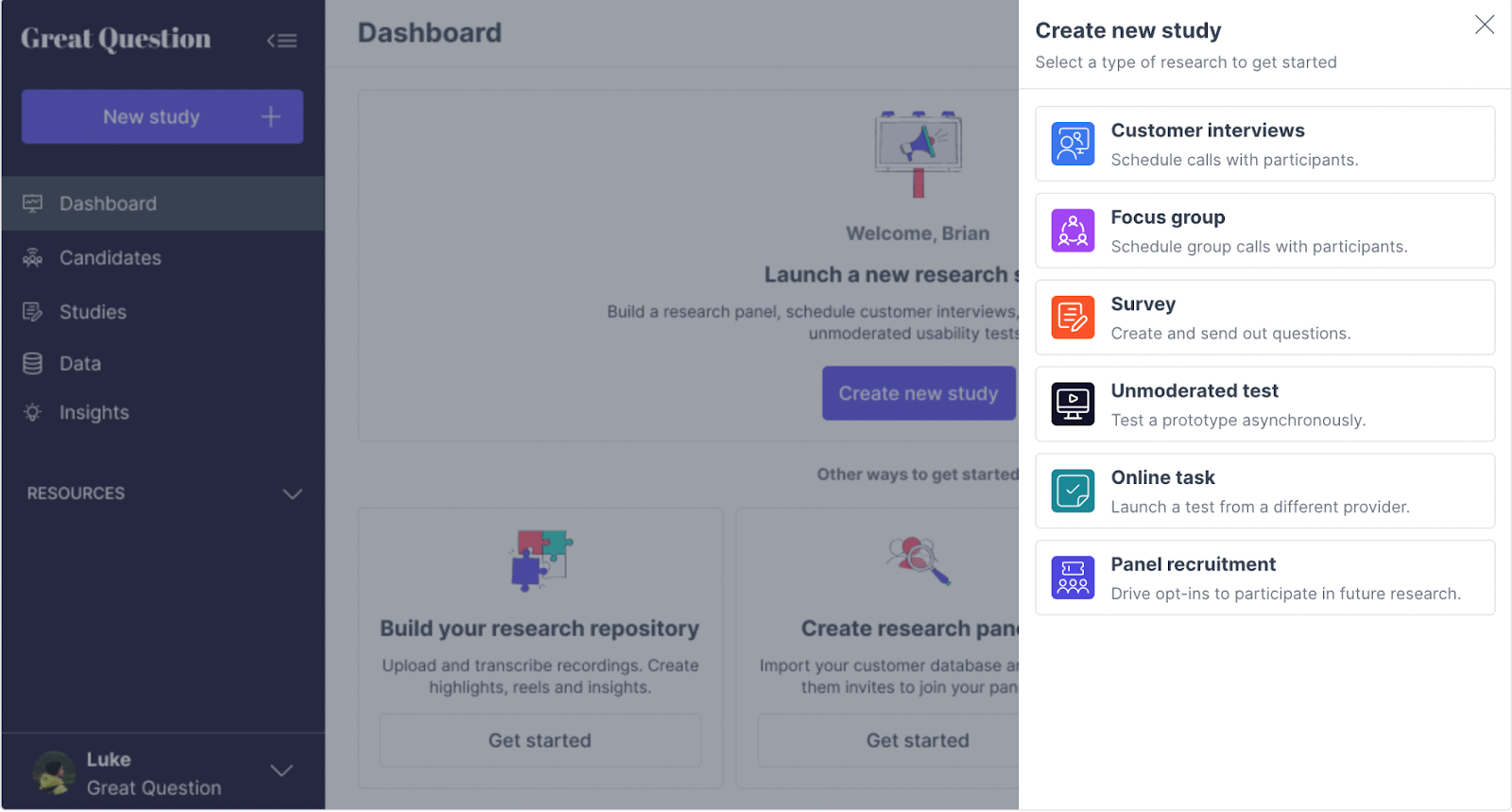
The first image makes Great Question’s breadth obvious right away, with options for customer interviews, focus groups, surveys, unmoderated tests, online tasks, and panel recruitment all available from the same starting point.
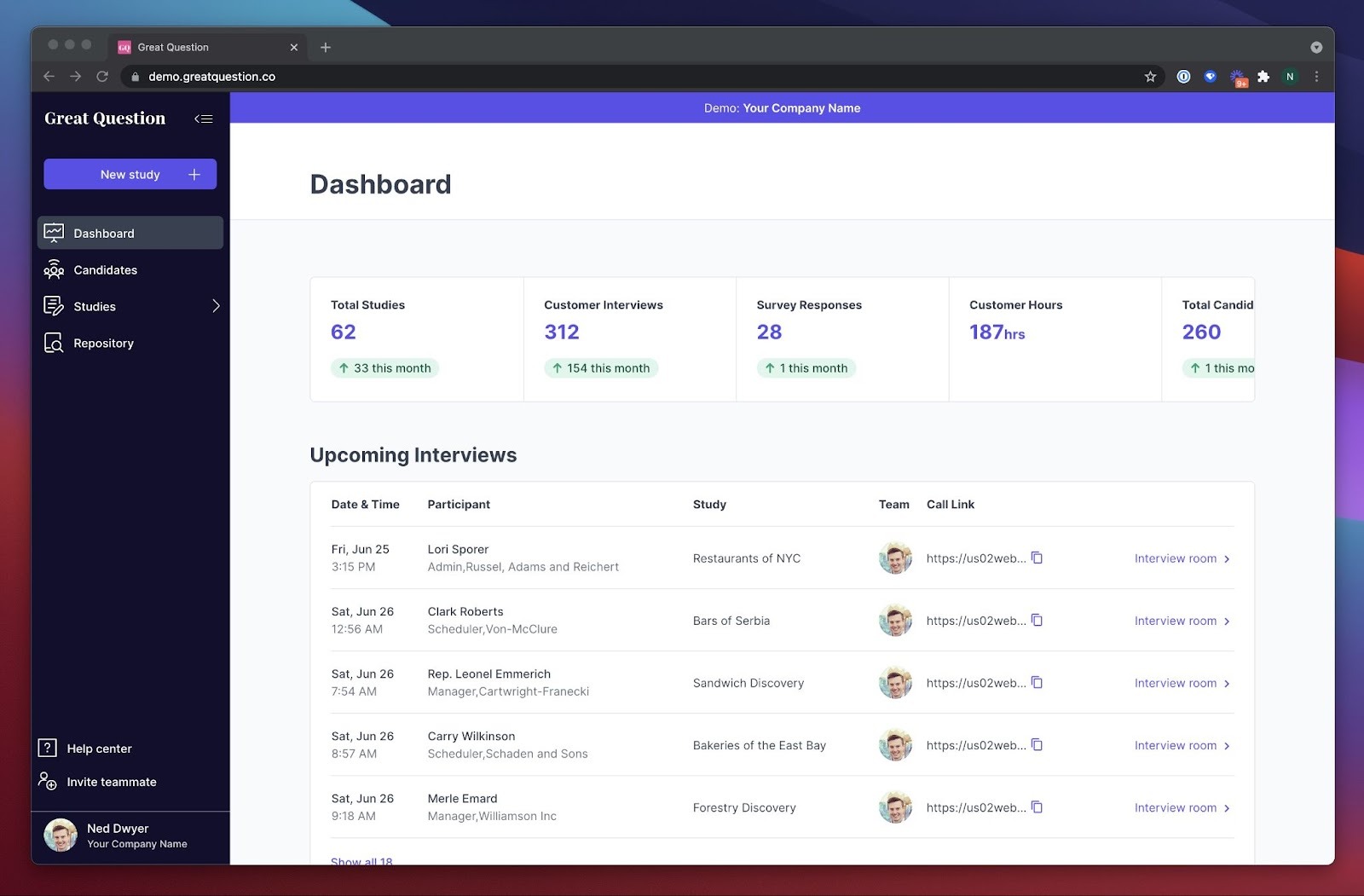
The dashboard view reinforces that all-in-one positioning by showing studies, interviews, survey responses, customer hours, and upcoming sessions in one place for teams managing research as an ongoing workflow.
Pros
- Brings recruiting, scheduling, surveys, interviews, incentives, and repository workflows into one platform
- Good for cross-functional teams running research together
- Easier to adopt than a more research-heavy setup
- Public entry pricing and a free plan improve evaluation speed
Cons
- Participant pool depth may vary by audience
- Less differentiated if your main need is immediate post-event interviewing like Frank
- May not be the best fit for teams looking for heavy enterprise survey infrastructure like Qualtrics
Why choose Great Question over Outset?
Choose Great Question over Outset if your main issue is that Outset feels too specialized or too research-ops-oriented for the way your team works. Great Question is a better fit for teams that want a broader, easier-to-run workflow across recruiting, interviews, surveys, and synthesis.
Pricing
- 2 months free
- Paid plans from $99/seat/month
3.Maze
Who is this tool for: Maze is for product, UX, and design teams that need to test prototypes, websites, mobile flows, and product experiences quickly before making design or development decisions.
Maze is a product research and user testing platform built for teams that need to validate prototypes, flows, websites, mobile experiences, surveys, and interviews quickly. It is strongest when the real need is UX testing and product validation, not just AI-led interviewing. Maze also supports prototype testing, live website testing, moderated interviews, mobile testing, AI analysis, and shareable reports.
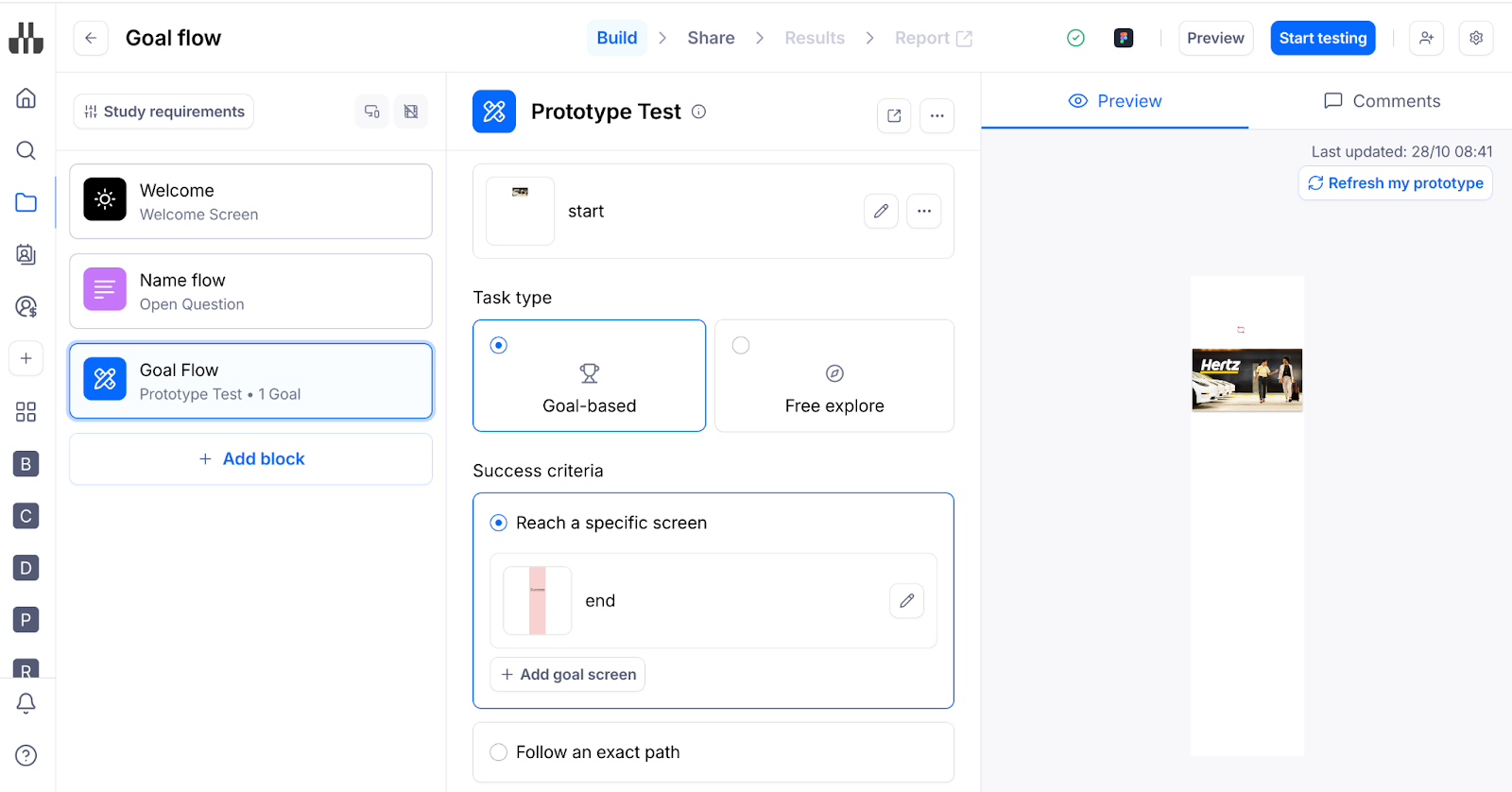
This setup screen highlights Maze’s product-testing DNA, with a prototype test flow built around goals, task type, and success criteria rather than just interview setup.
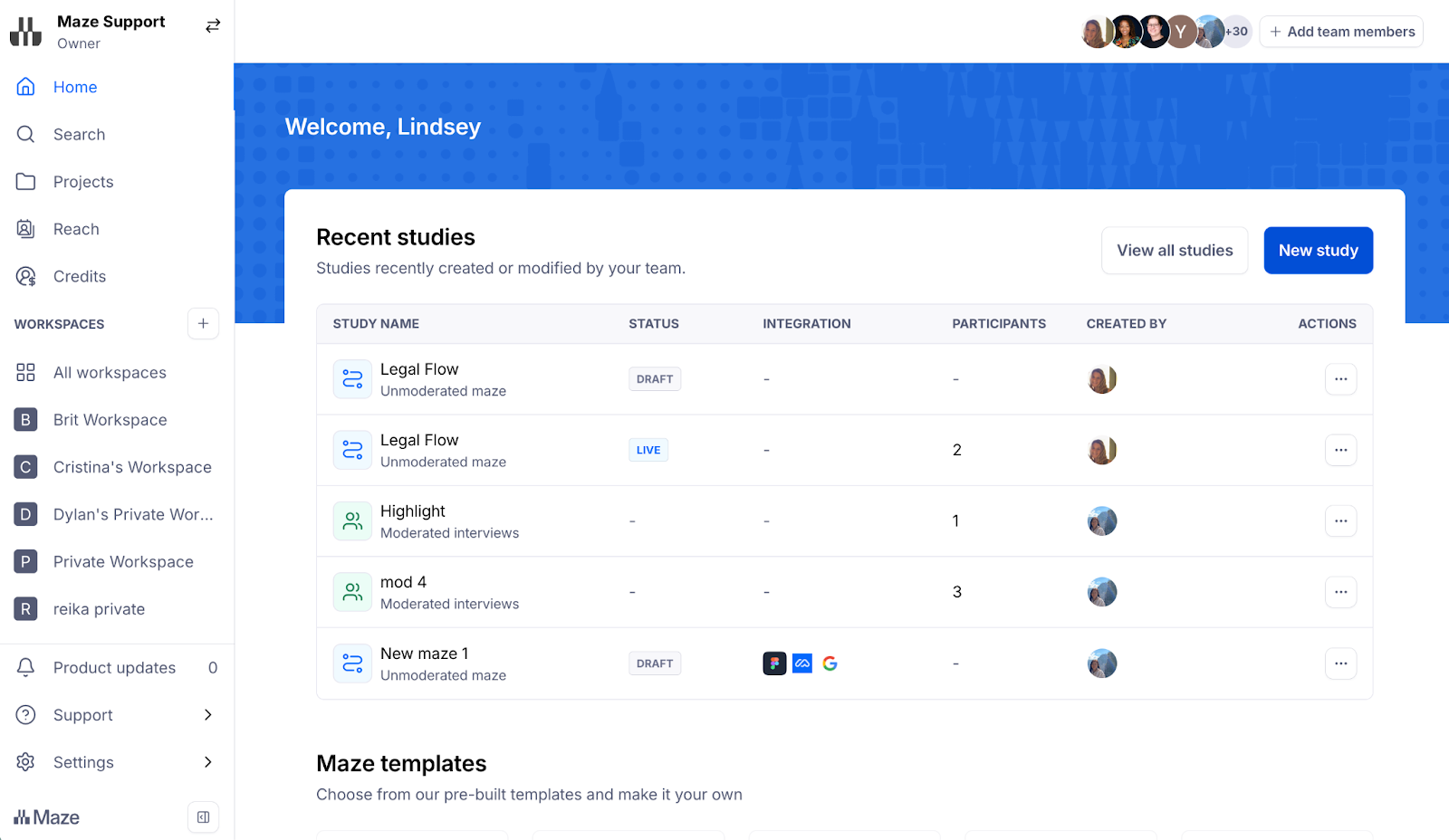
The dashboard side of the product matters just as much, because it is where those tests become structured evidence teams can use to evaluate flows, validate designs, and move faster with product decisions.
Pros
- Very strong fit for prototype and usability testing
- Broad method coverage across testing formats
- Good for product teams that need rapid iteration
- Ease of use and Figma integration
Cons
- Less of a real-customer interview workflow than Frank
- Can feel expensive for some teams as usage grows, which can be frustrating
- More UX-testing-oriented than customer-conversation-oriented
Why choose Maze over Outset?
Choose Maze over Outset if your problem is really method fit. Outset is strong when you want AI-moderated qualitative interviews, but Maze is the better pick when your team needs prototype testing, usability research, mobile testing, or broader product validation workflows that go beyond interview-led discovery.
Pricing
- Free plan available
- A Starter plan at $199/month billed annually
- Enterprise pricing available for larger teams
4.dscout
Who is this tool for: dscout is for research teams that need richer qualitative insight through diary studies, in-the-moment feedback, participant missions, and more flexible field-style research.
dscout is a qualitative research platform built for in-the-moment insight capture, diary studies, flexible qual workflows, and participant-rich research. It is especially strong for teams that need richer field-style qualitative work. dscout’s own materials and third-party reviews emphasize flexibility, participant quality, and support for multiple qualitative methods.
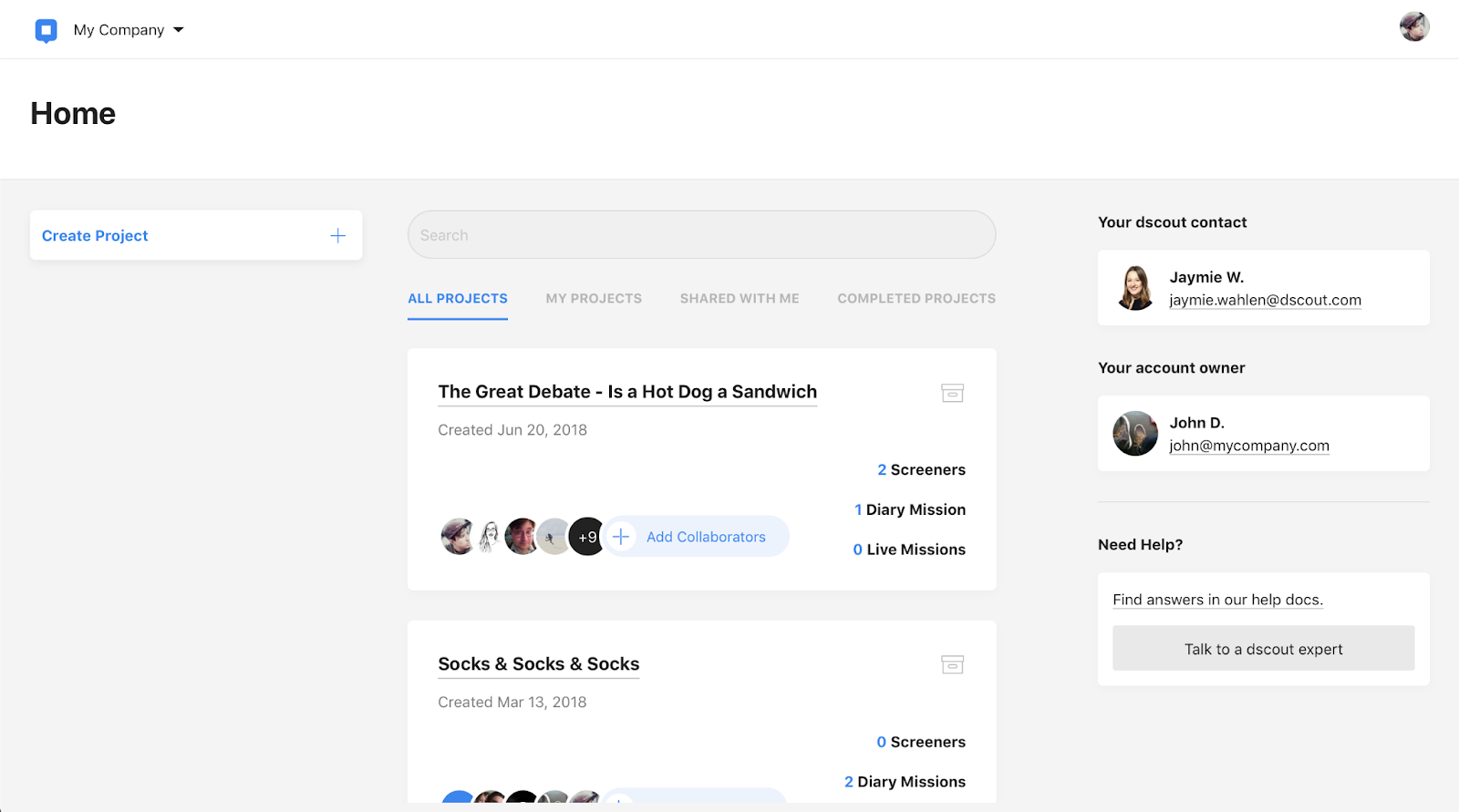
The setup dashboard shows dscout as a project-based qual platform, where teams can create and organize studies with diary missions, live missions, screeners, and collaborators.
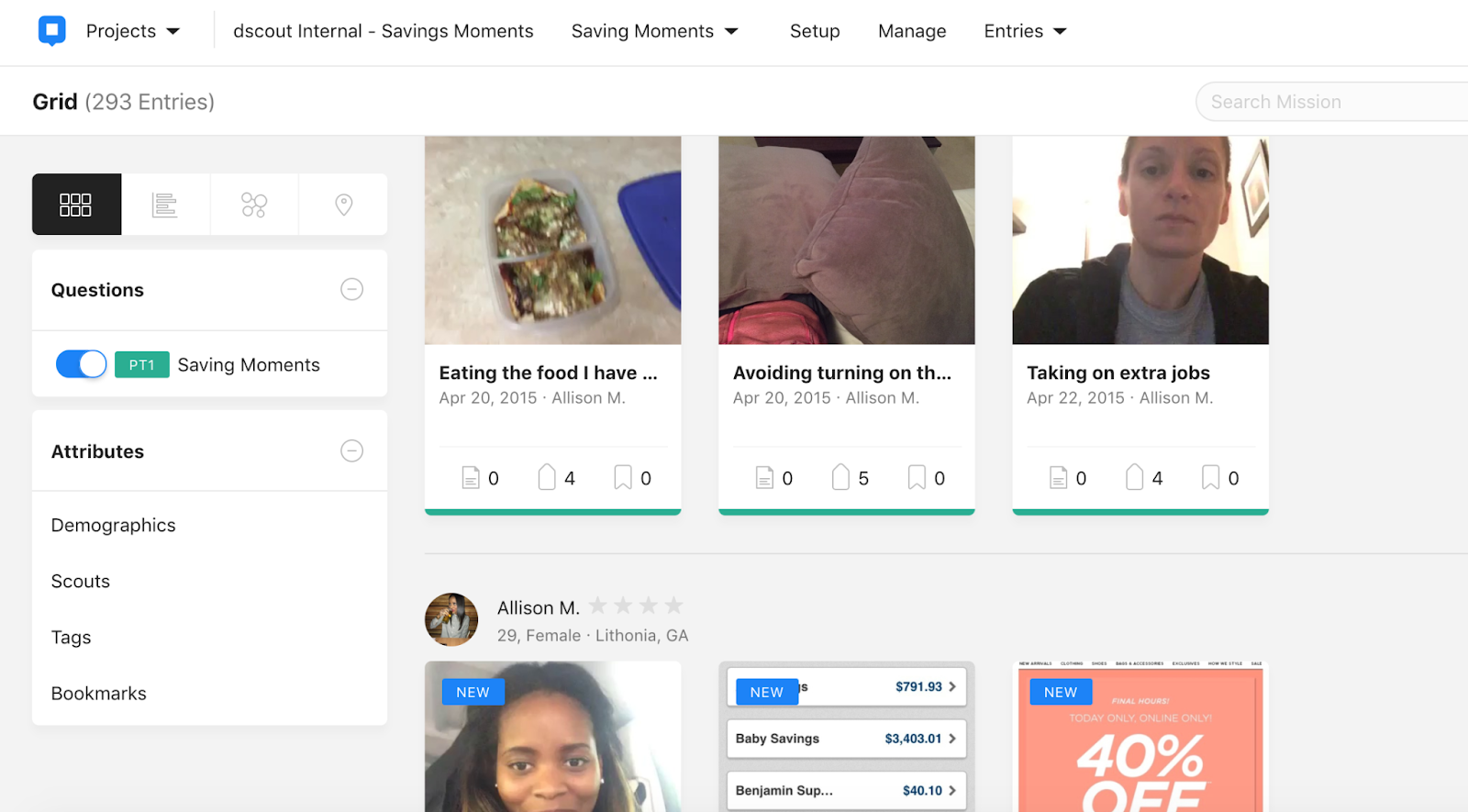
The results view then shows why researchers use it for richer qualitative work, with real participant entries, media-based responses, filters, and attributes that support deeper in-context analysis.
Pros
- Excellent fit for diary studies and in-context qualitative work
- Strong participant infrastructure
- Flexible across multiple qualitative methods
- Well reviewed by researchers for workflow fit
Cons
- dscout explicitly says it is not meant for small teams with budgets under $20K
- Also says it is not meant for ad-hoc studies
- Less lightweight and adoption-friendly than Frank or Great Question
Why choose dscout over Outset?
Choose dscout over Outset if you need a different kind of qualitative depth, especially diary-style, in-the-moment, or mixed qualitative studies. It is not the better choice for lighter adoption, but it is a stronger choice when your real issue with Outset is that AI-moderated interviews are not the full research method you need.
Pricing
- Custom pricing
- Not meant for small teams with budgets below $20K
5.UserTesting
Who is this tool for: UserTesting is for larger product, UX, and customer experience teams that need fast feedback from real people across websites, apps, prototypes, journeys, and digital experiences at scale.
UserTesting is a broad user research and experience testing platform built for organizations that need fast feedback from real people across products, prototypes, websites, and journeys. It is especially strong for enterprise-scale usability testing and cross-functional experience evaluation rather than lightweight startup-style customer interviewing. Users highlight ease of use, quick feedback, and diverse testing options.
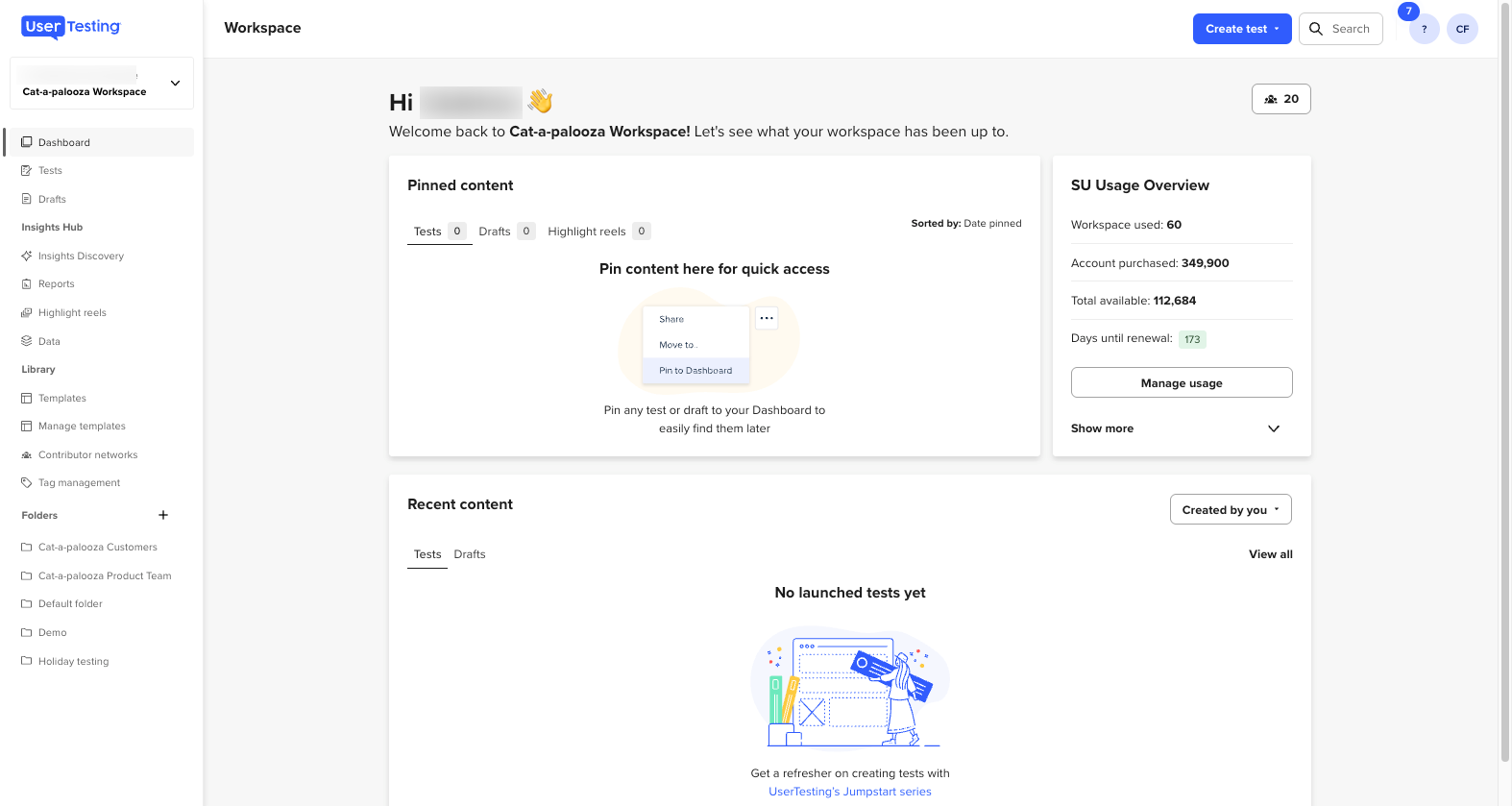
The setup screens show that UserTesting gives teams multiple ways to get started, whether that means linking an unmoderated test through another workflow, choosing from a large library of ready-made templates, or launching studies directly from the workspace.
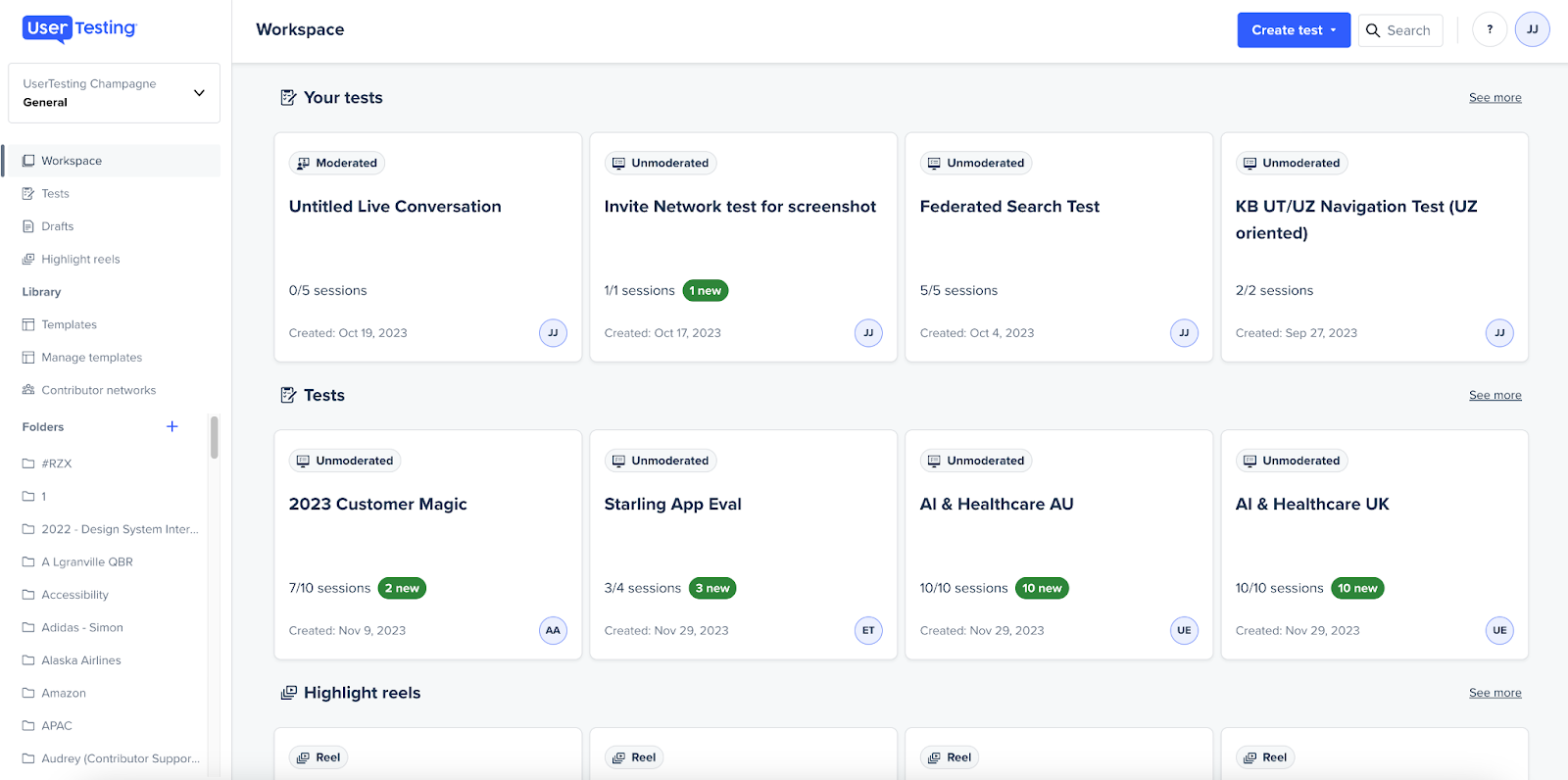
The dashboard view then shows how that scales in practice, with tests, highlight reels, folders, and active projects organized in one place for teams running ongoing usability and experience research across many workstreams.
Pros
- Strong for usability and journey testing at scale
- Wide range of test formats
- Fast access to participant feedback
Cons
- Participant quality can vary according to some reviews
- Pricing is custom and may feel heavy for smaller teams
- Less focused on deep AI-moderated interviews than Frank or Outset
Why choose UserTesting over Outset?
Choose UserTesting over Outset if your team needs broader usability and experience testing. It is the stronger option when the real job is validating interfaces, journeys, and user reactions at scale across multiple teams.
Pricing
- Custom pricing
- Plans include Advanced, Ultimate, and Ultimate+
- Free trial available
6.Qualtrics
Who is this tool for: Qualtrics is for enterprise teams, research departments, and larger organizations that need advanced survey research, analytics, dashboards, and a more complete strategic research infrastructure.
Qualtrics is built for teams that need a broader research infrastructure, especially survey-led research, advanced analysis, guided solutions, dashboards, and higher-volume programs. It now offers a self-serve Strategic Research option for smaller teams, but it remains most compelling for organizations that want a more complete research and insights system rather than a lighter workflow tool.
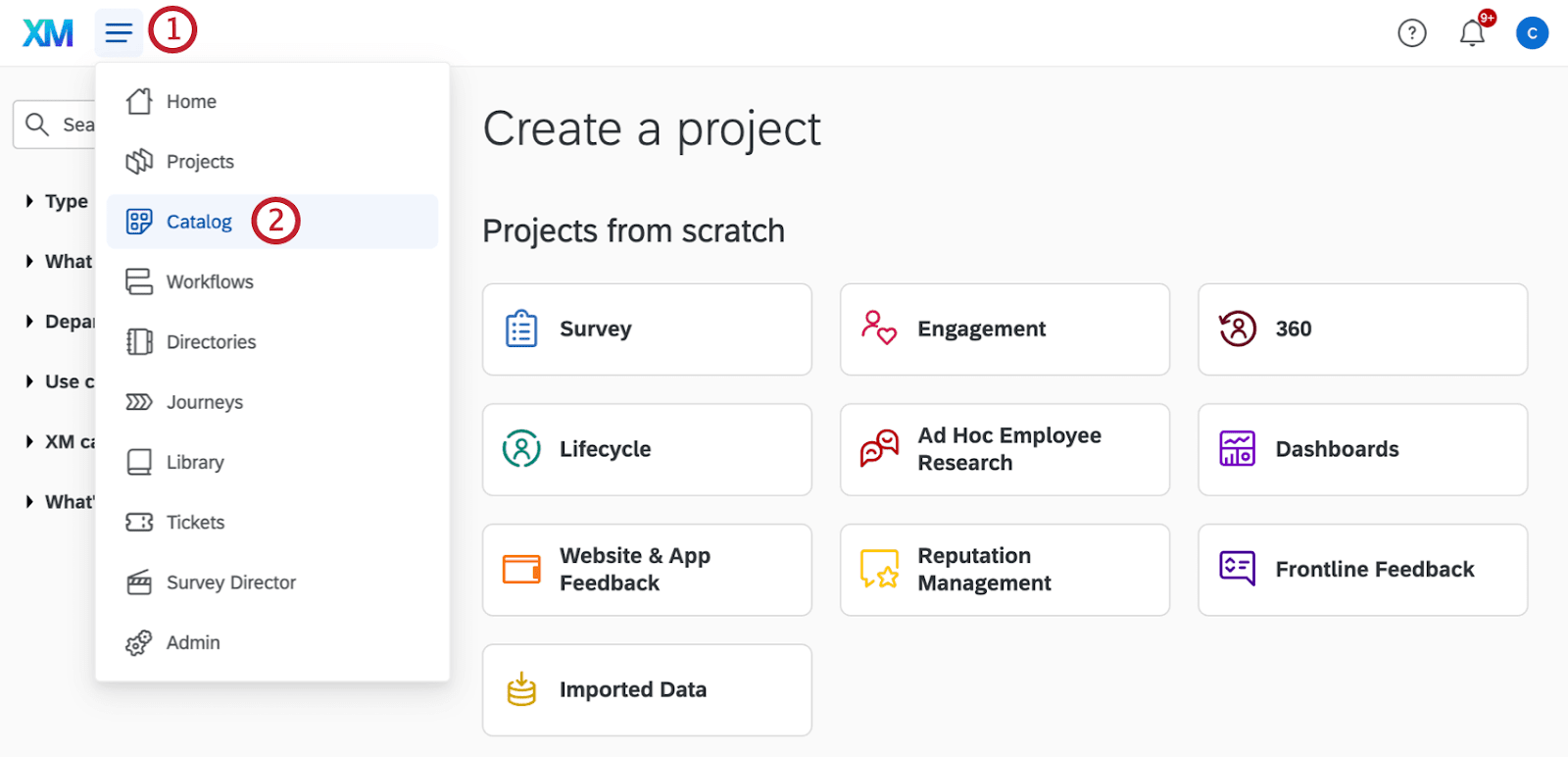
The setup image immediately signals a much broader research infrastructure, with multiple project types like surveys, engagement, lifecycle, website and app feedback, dashboards, and frontline feedback available from the start.
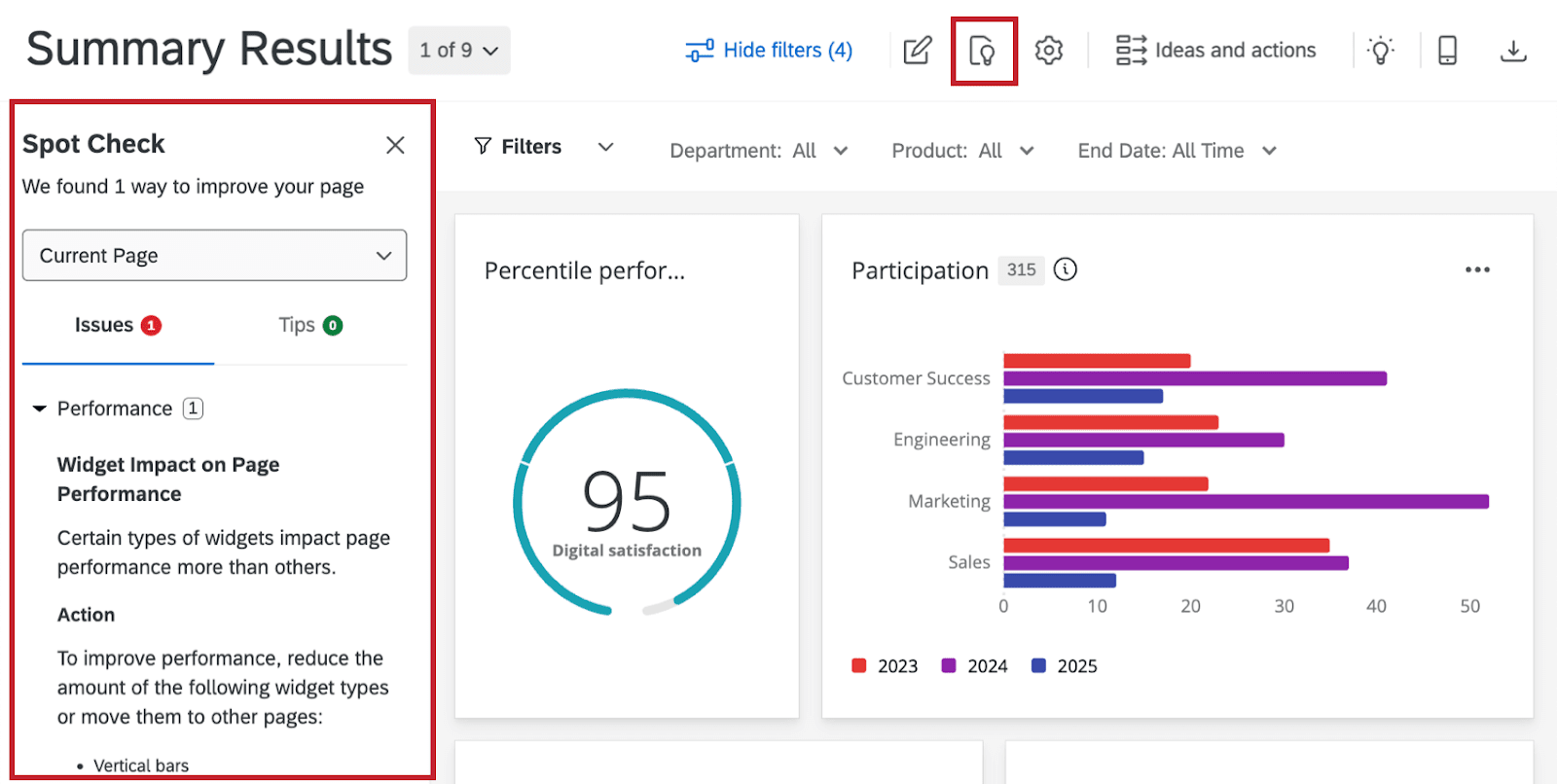
The summary results dashboard supports enterprise positioning, showing filtered reporting, benchmark-style performance views, participation data, and AI-assisted recommendations that are built for larger, more structured research programs.
Pros
- Strong for advanced survey and strategic research programs
- Includes guided solutions, advanced analysis, and dashboards
- Supports both smaller and enterprise-scale research programs
- Widely used and heavily reviewed, which gives buyers more third-party proof than newer tools in the category
Cons
- More complex than lighter tools
- A steeper learning curve for advanced features
- Still not the best fit if your main need is real-time customer conversation workflows like Frank’s
Why choose Qualtrics over Outset?
Choose Qualtrics over Outset if your issue is not that Outset is too weak, but that it is too centered on real interviews for the kind of broader research program you need. Qualtrics is the better fit for teams moving toward a more complete strategic research stack with stronger quantitative, survey, and analysis infrastructure.
Pricing
- Free account available for Qualtrics Surveys
- Strategic Research self-serve plan: $420/month billed annually at $5,040/year for 1,000 responses
- Enterprise Strategic Research: custom pricing
Which Outset Alternative Should You Choose?
The best Outset alternative depends on what felt off for you in the first place.
- Use Frank if you want deeper customer conversations without the scheduling drag, and if your team needs a faster, easier way to learn from real customers close to the moment that behavior happens.
- Use Great Question if you want a broader research workflow that is easier for cross-functional teams to run without building a heavier research operation.
- Use Maze if your main need is prototype testing, usability research, and faster product validation rather than interview-led discovery alone.
- Use dscout if you need richer qualitative depth, especially for diary studies, in-the-moment research, and more flexible field-style methods.
- Use UserTesting if you need large-scale usability and experience testing across journeys, interfaces, and teams.
- Use Qualtrics if you are building a broader strategic research program and need stronger survey, analytics, and enterprise research infrastructure.
If your priority is understanding what customers really think, feel, and do, without waiting weeks or building a full research machine around it, Frank stands out for a reason. It gives smaller and growing teams a more direct way to capture the why behind customer behavior and turn it into something useful fast.
The important part is not choosing the most impressive platform on paper. It is choosing the one that fits the way your team actually learns.

.jpg)