
When was the last time your churn spiked and you had no idea why until the exit surveys rolled in? This could often be prevented with earlier interviews.
Most teams collect customer feedback too late. In this guide, you'll learn how to spot the six moments in your product journey where interviews matter most by asking exact questions to catch churn, confusion, and missed upgrades before they show up in your metrics.
When is The Right Moment?
Interview moments are points in the product journey where user intent, emotion, or behavior shifts. They’re the turning points when someone decides to commit, hesitate, work around, upgrade, complain, or leave.
Or
Put simply: anything that moves a metric can become an interview moment.
When you are deep in the development process, it is easy to get lost in the "how" and forget the "why." You might feel like there is nothing to change, but signs are always there if you know where to look.
Two Questions to Identify the Right Customer Interview Moment
When you identify a moment worth interviewing for, your goal must pivot to address two specific psychological dimensions:
1) The Emotional Precursor
What were they feeling right before that moment? Understanding the friction or excitement leading up to a behavior change helps you either replicate it or remove it.
Ask:
- “What was going on right before this happened?”
- “What made it feel urgent then—and not earlier?”?
- “What were you worried would happen if you didn’t solve it?”
2) The "What If" Scenario
What would have happened if your product didn’t exist at that moment? This helps clarify your product’s value in concrete terms.
Ask:
- “If you couldn’t use this, what would you do instead?”
- “What would you lose—time, money, quality, confidence?”
- “How would you explain the impact to your boss or team?”
If the alternative is “I’d just do nothing,” that moment usually isn’t worth building around.
6 Key Moments in Your Product Journey Worth Interviewing About
You don’t need to map everything at once. Start with the one most tied to your current goal (e.g., activation if onboarding sucks, churn if retention is tanking).
“What finally pushed you to look elsewhere?” “What was the last straw?”
Quick example: A team noticed support tickets clustering 8–10 days after signup. All variations of "I can't connect my team." Twelve interviews later, they had three recurring themes, two UI renames, and a 22% lift in 14-day activation.
The signal was in the data—the why was only in the interviews.
The Interviewer’s Toolkit: Questions That Get Real Answers
To get strong results, you need both the skill to ask the right questions and the discipline to prepare, listen, and analyze.
Questions That Come in Handy
- "How do you deal with this right now?"
- "On a scale of 1-10, how annoying is this problem?"
- "What's an even bigger pain in your day?"
- "Tell me about the last time this came up."
- "Do you use any other tools for this? Excel? Word?"
- "If you could wave a magic wand, how would this work?"
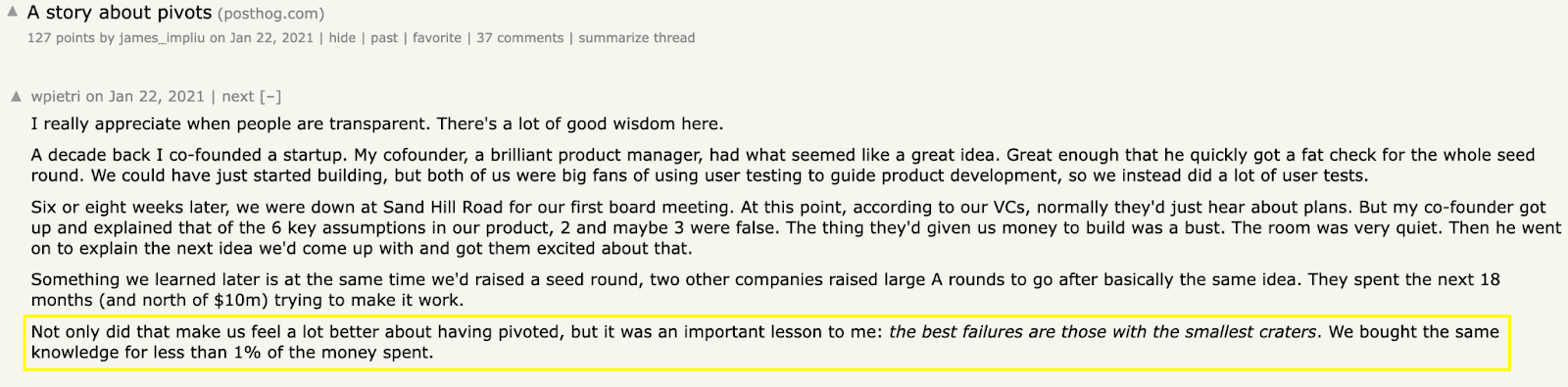
Avoid vague or hypothetical questions. These kinds of questions can save you millions, as they did for one Y Combinator startup.
Keeping the Conversation Flowing
To get the best data, follow these professional "Golden Rules":
- Avoid Leading Questions: Instead of asking "Wouldn't it be better if...?", ask "How would you improve this?"
- Do Not Sell: You are there to learn, not pitch. Save the product talk for a demo later.
- Abandon the Script: If a user mentions something fascinating, follow that thread. Don't be a slave to your template.
- Record Everything: Always ask for permission to record. Human notes miss the nuance of how a user says something.
How to Scale Customer Interviews with Frank
The right toolkit accelerates everything. Frank is an AI interviewer that runs customer conversations automatically and delivers structured insights without the scheduling overhead of traditional research.
Here's what that unlocks at each moment:
- Zero scheduling, zero no-shows. Frank is available 24/7, so you can trigger interviews immediately after the behavior you care about — not two weeks later when the memory has faded.
- 100+ interviews simultaneously, across 30+ languages, so you're not limited to the 1–2 users per week that traditional interviewing allows.
- Higher honesty. Participants tend to give more candid answers to an AI than to a human interviewer — reducing social desirability bias right at the source.
- Traceable transparency. Every structured summary links back to raw transcripts and recordings, so insights aren't a black box — you can verify them.
- Scientific methodology baked in. Frank's interview structure and summaries are built on proven research frameworks, so you get insights that are not just fast but credible.
- Minimize founder bias. Frank doesn't have assumptions to validate. It probes deeper with follow-up questions without steering users toward the answer you want to hear.
The result: interview coverage that once required a full research team and a six-figure budget, delivered at startup-friendly speed and cost.
Closing Thought
If you only interview when something breaks, you’ll always be reacting.
Pick one moment tied to your goal, run interviews with one segment, and capture the context and motivations right before the moment occurred. What triggered it, what they tried first, and what they would have done if your product didn't exist.
To scale this process, use an AI interviewer to run the same interviews across time zones and segments, which will automatically summarize themes and quantify which triggers show up most often so your roadmap is driven by evidence, not volume.