
AI can help sales teams understand why proposals get ghosted by analyzing call transcripts, email threads, CRM notes, and proposals to identify likely reasons a deal stalled. It can reveal mismatches between a rep's recorded loss reason and the evidence in the sales conversation.
There are two ways to investigate a ghosted deal: use AI tools like ChatGPT or Claude to analyze existing sales materials, or interview the prospect directly to learn what your team may have missed. This guide explains how to investigate a deal in about 20 minutes, identify common types of buyer confusion, and decide when a dedicated AI interview tool like Frank can help.
Why Sales Teams Misread Ghosted Deals
Having developed my own startup and worked as an SDR for several companies, I believe there is an industry-wide misdiagnosis.
Sales teams assume ghosted deals went to a competitor. So they respond by sharpening the pitch, cutting the price, and building a better battlecard. Then they wonder why win rates don't move.
The data doesn't support the assumption. In Lightspeed Venture Partners' 2024 Sales Trends survey of 154 venture-backed, mostly B2B startups, reported by SaaStr, 27% of lost deals were reported as lost to a competitor. "No action" accounted for 53%. "Prospect went silent" accounted for 39%. Those numbers overlap, but the pattern is clear either way: the thing beating you most often is inaction.
That changes what you should be building. If you're fixing price and competitive positioning when the actual problem is internal confusion or inertia on the buyer's side, you're solving the wrong problem.
Part of why this stays invisible is that your CRM can't tell the difference, so your win/loss analysis starts from bad data. Reps pick the closest dropdown option when they don't know what happened. In other words, it’s a guess dressed up as data.
How to Use AI to Re-Investigate a Ghosted Deal
You don't need a tool to start fixing this. You need the materials you already have. Here's the workflow, adapted from Succession's guide for life science sales reps:
1. Pick one deal. Choose a recently closed-lost or ghosted deal where the CRM has a loss reason logged. That logged reason is what you're about to test.
2. Gather the raw materials. Call transcripts, the full email thread, internal Slack notes about the deal, and the proposal itself with any redlines or comments.
3. Run the re-investigation prompt. Paste the materials into Claude or ChatGPT with a prompt like this:
"Act as a senior business development analyst. The AE logged this deal as [logged loss reason]. Analyze the attached call transcripts, emails, and proposal materials and tell me:
(1) what you believe the actual primary reason for the loss was
(2) the specific evidence that supports it
(3) the point in the deal where we lost control of the conversation."
Remove customer names, confidential pricing, and anything else you would not paste into a public AI tool before you upload the materials.
4. Compare the AI's answer to the CRM entry. This is where the gap usually shows up. In Succession's example, an AE logged a deal as "lost to a competitor, they had a faster delivery timeline." The AI's read of the same materials was: "Primary loss reason appears to be lack of confidence in implementation support... The AE pivoted to talk about delivery speed instead of addressing the concern." Same deal, two different stories. Only one of them is actionable.
5. Run the confusion check. If the AI's answer points to silence rather than a clear loss, test it against the three types of confusion I learned to look for as an SDR.
- Relevance confusion ("why you, not them"). The transcript shows the buyer comparing categories, asking why this is different, or repeating the same scope question. Coach the rep to tie the problem, the current cost, and the specific reason your product fits before talking features.
- Process confusion ("what am I buying and what happens next"). The transcript shows uncertainty about what is included, who needs to sign off, or what happens after the proposal. Coach the rep to map the buying steps and recap the next action in plain language.
- Risk confusion ("what happens if this goes wrong"). The transcript shows worry about implementation, internal pushback, or being blamed if the project fails. Coach the rep to surface the risk early and answer how support, ownership, and rollout will work.
Name which one it was. That's your coaching note.
This works with tools you already pay for. No new vendor required. It's also where the honest question comes in: when does DIY stop being enough?
How Frank Helps Sales Teams Understand Ghosted Deals
When a sales deal goes cold, call transcripts and email threads can help explain what happened, but they can't tell you everything the prospect was thinking. AI can analyze the information you already have, but it can't ask the prospect what was missing from the conversation.
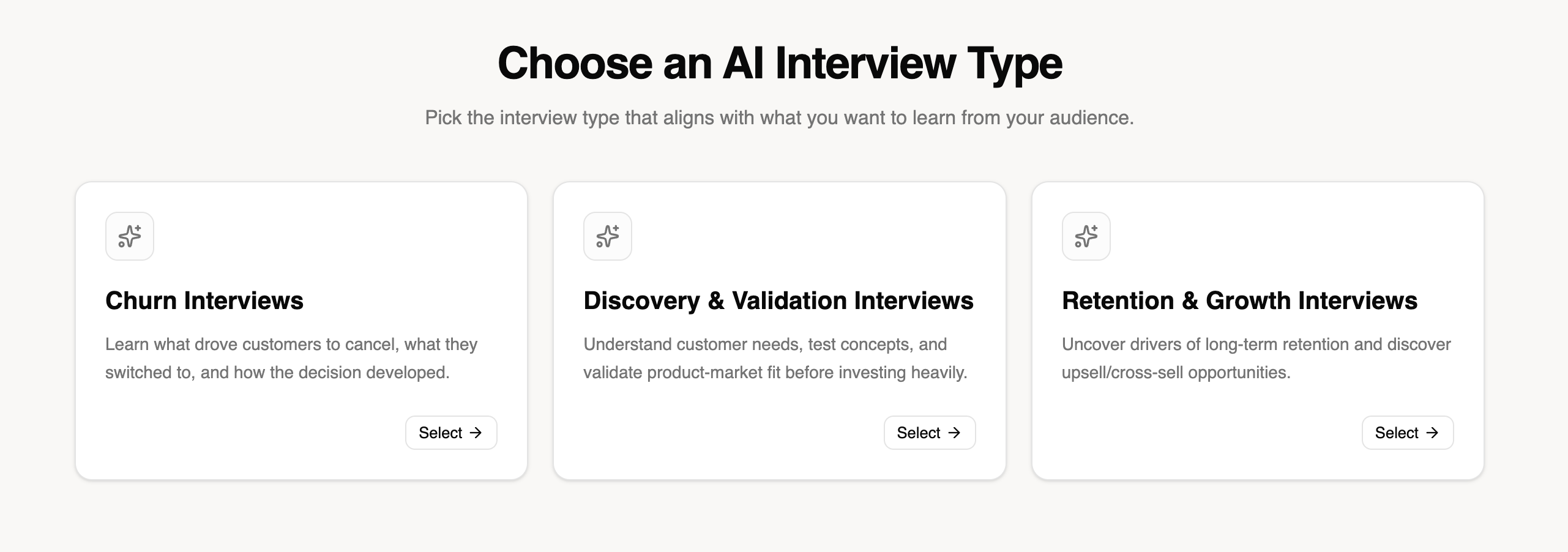
That's where Frank can help. With its win/loss analysis use case, sales teams can interview prospects who decided not to move forward or stopped responding during the sales process. Instead of sending another "just checking in" email, you can invite a prospect to share what influenced their decision, what concerns they had, or why they didn't move forward.
To get started, define what you want to learn. Maybe deals keep stalling after proposals, prospects raise objections that never get resolved, or buyers drop off at a particular stage. Frank conducts the interview and asks follow-up questions based on each response, helping you explore the reasons behind the decision rather than relying on a fixed list of questions.
Some prospects may also feel more comfortable discussing pricing concerns, internal disagreements, or implementation risks in a separate interview than directly with the salesperson who pitched them.
You get a structured summary the next morning, and every insight links back to the original transcript or recording, so nothing you act on is a black-box summary you have to take on faith. Frank supports interviews in 30+ languages, which matters if your pipeline includes international buyers who never fully articulated their confusion in English on the call.
Use the DIY prompt to analyze deals where you have transcripts, emails, or other sales records to work with. When those materials don't explain why a deal went cold, Frank gives you a way to ask the prospect directly.
A Weekly Habit for Finding Out Why Deals Went Quiet
Ghosting isn't a personal failing, and it isn't usually a loss to a competitor either. It's what happens when a buyer gets stuck and doesn't know how to say so. Your CRM's dropdown will never capture that. A transcript re-read might. A direct, honest conversation, even with a machine, usually will.
Start smaller than a full program. Every Friday, choose two closed-lost or ghosted deals from that week, run them through the re-investigation prompt, and label each one as relevance, process, or risk confusion. Compare that label to what's logged. Do that for a quarter, and your loss data stops being fiction. The starting point is a weekly habit.

FAQ
Isn't ChatGPT on my own transcripts enough? Why would I need a dedicated tool at all?
For a handful of deals a week, it usually is. The DIY prompt works with tools you already pay for and takes about 20 minutes per deal. The limit is that it only analyzes what's already in your materials. It can't ask the prospect anything new. Once you're trying to do this across every stalled deal, or you need to reach a prospect who never told your rep anything, that's the point where a dedicated tool like Frank starts to make sense. If you're weighing options, Best AI Customer Interviewers in 2026 breaks down how the major players in this category differ.
Will a prospect actually respond to an AI outreach after ignoring three emails from a human rep?
The response rate is not known. No public research shows how often ghosted prospects complete an AI interview after ignoring a rep. The case for trying it is that the interview is framed as feedback, and people often find it easier to explain a stalled decision outside the sales conversation.
What do I do if the AI's read of a deal contradicts what my rep logged?
Treat it as a coaching conversation, not a "gotcha." Reps aren't lying when they log a guess — they usually just don't have full visibility into what happened on the buyer's side. Bring the AI's analysis and the supporting evidence to a 1:1, and use it to sharpen how the rep handles the next similar deal.
Does this replace human follow-up entirely?
No. Sales reps still own the relationship and decide how to follow up. Frank adds another way to gather feedback when a deal goes cold and regular follow-ups don't reveal why. Instead of relying on a prospect to explain their decision in an email to the salesperson, you can invite them to share their perspective in an AI interview.
How is this different from a customer satisfaction survey?
A survey asks a closed-ended question and gets a number. This is a conversation that adapts based on what the prospect says, aimed specifically at surfacing the reasons and decision drivers behind their silence not a satisfaction score.
What if we don't have call recordings or full email threads for older deals?
Start with whatever you have. Even an email thread alone is often enough to run the re-investigation prompt and get a useful comparison against the CRM entry. For deals with real gaps in the data, that's exactly the case where reaching out to the prospect directly matters more than reconstructing what already happened.